
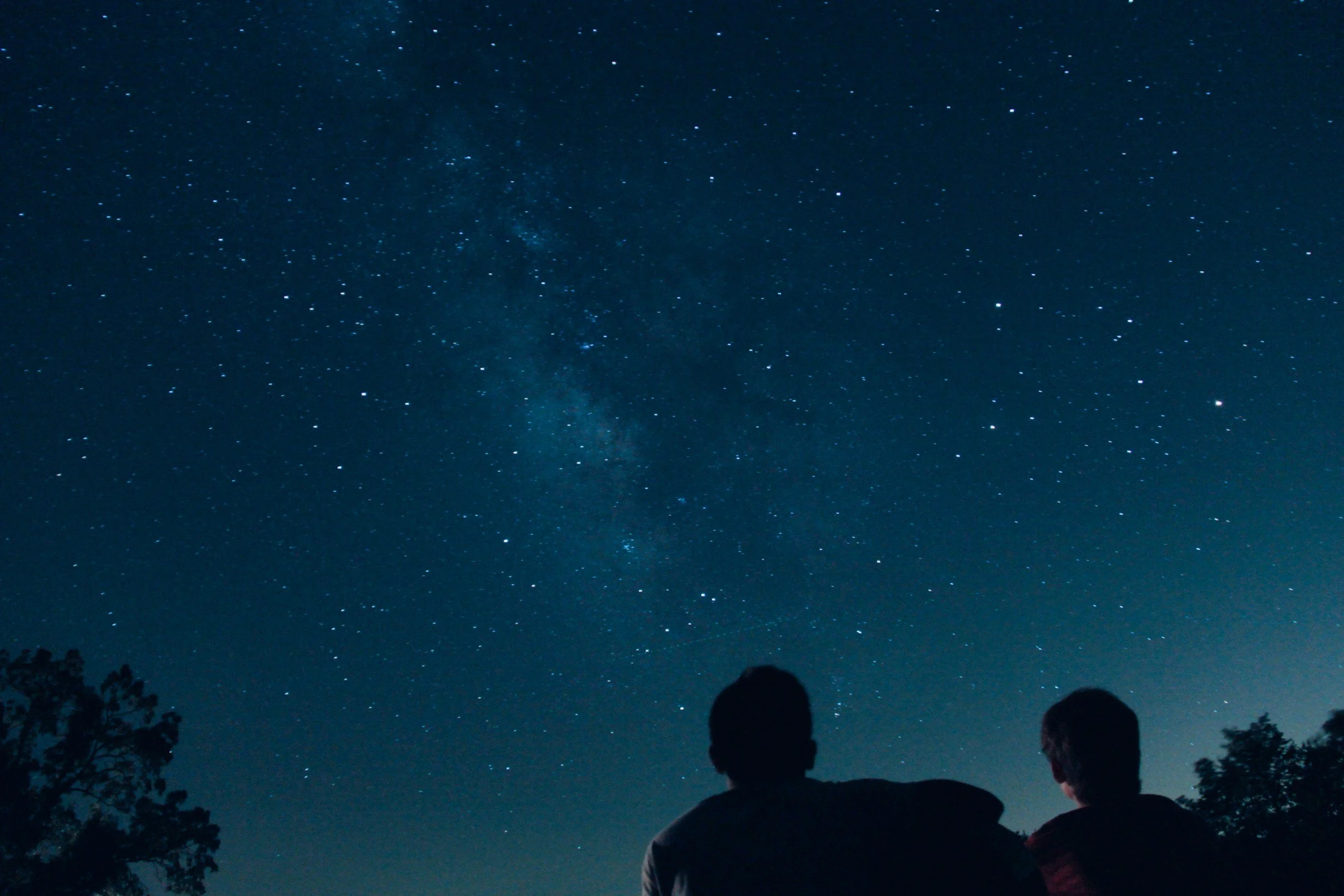
Stargazing in the Cairngorms National Park
There are few things quite like stepping outside on a clear winter night in the Cairngorms and looking up.
Away from the lights of towns and cities, the sky can feel enormous. On the right night you might see the Milky Way stretching overhead, pick out planets and constellations with the naked eye, catch a meteor streaking across the darkness or, if you’re particularly lucky, spot the Northern Lights.
And you don’t need to be an astronomer — or even own a telescope — to enjoy it.
Why are the Cairngorms so good for stargazing?
The combination of low light pollution, wide open landscapes and long, dark nights makes the Cairngorms one of Scotland’s best places to experience the night sky.
In the north of the National Park, Tomintoul & Glenlivet Cairngorms Dark Sky Park was awarded International Dark Sky Park status in 2018 and covers around 244 square kilometres of exceptionally dark countryside.
Autumn and winter are particularly rewarding. The Milky Way can be spectacular during autumn and early winter, while the longer nights give you plenty of opportunity to head outside and see what’s happening overhead.
Where to go stargazing
You certainly don’t have to travel to a designated site in the Park to look at the stars: find a safe spot away from street lights on a clear night and give your eyes time to adjust to the darkness.
But if you fancy making an evening of it, there are several recommended viewing locations within the Tomintoul & Glenlivet Dark Sky Park.
Field of Hope, Tomintoul
Just outside Tomintoul, the Field of Hope is perhaps the easiest place to begin.
There’s parking and excellent visibility across the horizon, and a purpose-built SkyHide provides sheltered seating for stargazers. It's a particularly good location for looking for the Northern Lights between autumn and early spring.
Blairfindy Moor
A wonderfully open rural location with wide views towards the north and east. A short walk along the Speyside Way also takes you towards the historic site of the original Glenlivet Distillery.
Another good choice if the aurora forecast is looking promising.
The Carrachs, Braes of Glenlivet
More remote and wonderfully dark, The Carrachs offers excellent views of the northern and eastern skies. You can also walk towards the historic settlement of Scalan, which makes an atmospheric foreground if you’re interested in night-sky photography.
Glenconglass
With exceptionally dark skies and wide views in several directions, Glenconglass is particularly good for seeing the Milky Way during autumn and early winter.
Well of Lecht
At the foot of the Lecht Pass, this is another beautiful dark-sky location. The old mine building makes a striking foreground beneath the stars, particularly if you enjoy photography.
What might you see?
Quite a lot, even without a telescope.
Depending on the season, weather and moonlight, you may be able to see the Milky Way, familiar constellations, planets, shooting stars and meteor showers.
And then there are the Northern Lights.
We do occasionally get some wonderful aurora displays in the Cairngorms, particularly during the darker months. Locally and elsewhere in Scotland, you may hear them referred to as the Mirrie Dancers.
They're never guaranteed, of course. You need the right combination of solar activity, clear skies and darkness but that unpredictability is part of the excitement.
Try a guided stargazing experience
If staring upwards and wondering “is that a planet or just a particularly bright star?” sounds familiar, you can also join an organised stargazing evening.
The Cairngorms Dark Sky Park runs astronomy events throughout the darker months, usually combining an introduction indoors with an outdoor observing session if conditions allow. Telescopes are available at many events, so they're a great introduction if you've never tried stargazing before.
Small-group and personalised stargazing sessions can also be arranged, and equipment can be borrowed by prior arrangement from the Discovery Centre in Tomintoul.
There are other ways to experience the Cairngorms after dark too, including seasonal Stargazing Storywalks, which combine the night sky with stories inspired by the landscape, Gaelic culture and the area's Pictish past.
It's worth checking what's on before your visit, as some events are deliberately announced at fairly short notice when the weather forecast becomes clearer.
A few tips before you go
Choose a clear night. Cloud cover matters much more than cold temperatures, so check the forecast before setting off.
Think about the moon. A bright full moon can be beautiful, but its light makes faint stars and the Milky Way harder to see. For really dark skies, aim for a night around the new moon.
Give your eyes time to adjust. It can take 20 minutes or more for your eyes to become accustomed to darkness.
Avoid bright white torches. A red-light torch — or a red-light setting on your head torch — helps preserve your night vision.
Wrap up more than you think you'll need to. Stargazing involves a lot of standing still. A clear autumn or winter night in the Cairngorms can feel considerably colder after half an hour outside.
Take a flask. Not technically essential. Highly recommended.
And please choose somewhere safe to stop, park considerately and remember that some of the best dark-sky locations are remote, with limited or no facilities.
Stargazing with children
This can be a brilliant family activity because you really don't need much to get started.
Choose somewhere easy to reach, keep the first outing fairly short and give everyone something simple to look for: the Moon, a recognisable constellation, a planet or the Milky Way.
A flask of hot chocolate helps too.
Some of the organised Dark Sky Park events are suitable for all ages, making them a particularly good introduction for younger stargazers.
Make a night of it
One of the loveliest things about stargazing is its simplicity.
Head out after dinner, wrap up warmly, find somewhere properly dark and spend half an hour looking upwards. On a really clear night, you may find yourself staying considerably longer than planned.
Autumn and winter might bring shorter days to the Cairngorms but when the skies are clear, darkness is very much part of the experience.
Useful links
Tomintoul & Glenlivet Cairngorms Dark Sky Park — viewing locations, current events and monthly night-sky information
Discover Cairngorms — more ideas for things to see and do during your stay