
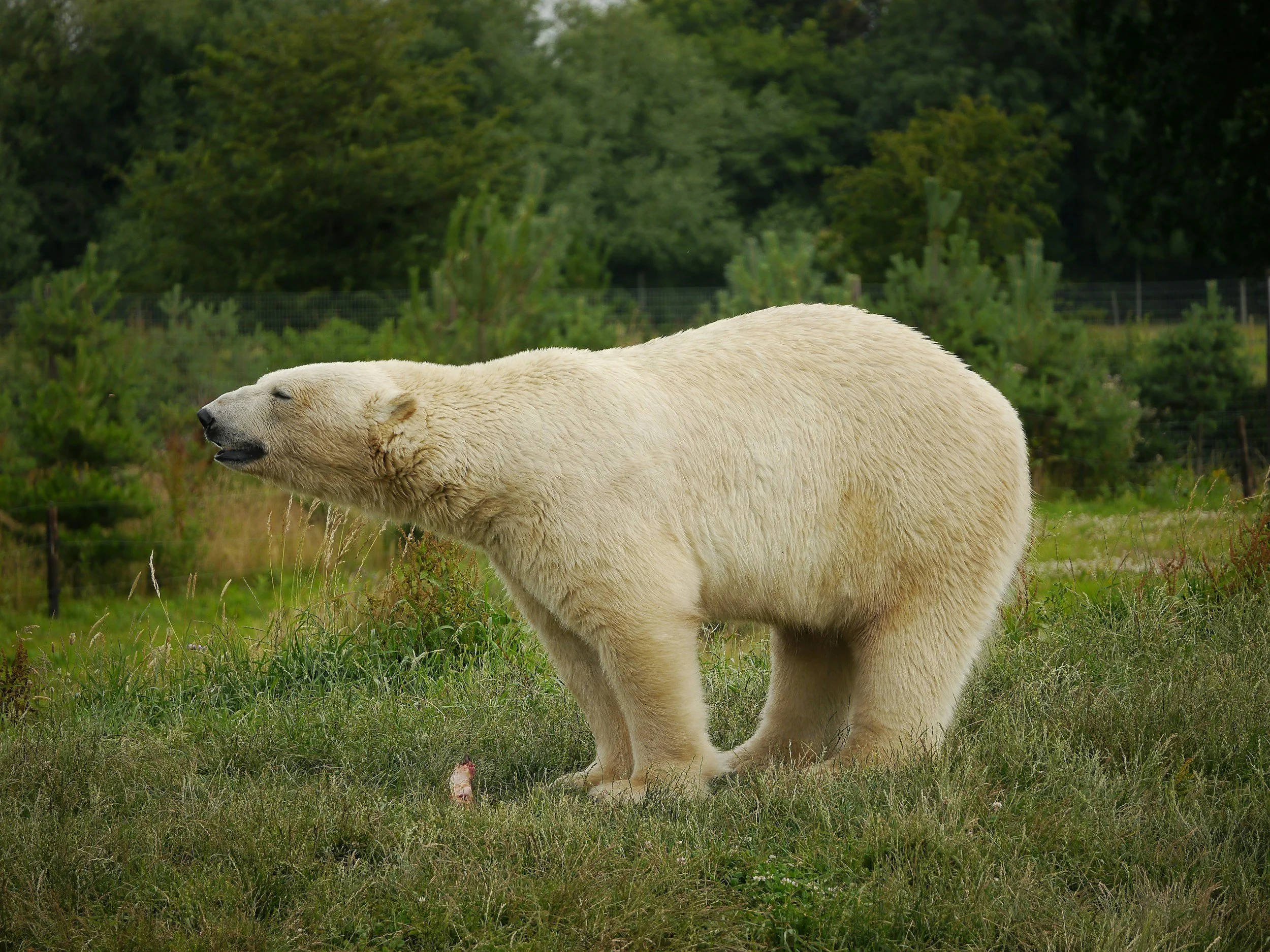
A long-time favourite of locals and tourists alike, the Highland Wildlife Park is home to some of the world’s most beautiful (and sadly, endangered) animals. You’ll be able to see native Scottish species such as the Capercaillie and the Scottish Wildcat, as well as more exotic animals such as the Amur Tiger and the Polar Bear.
Set in a huge site near Kincraig, around seven miles south of Aviemore, the park is run by the Royal Zoological Society of Scotland and combines a wildlife park with important conservation work here in the Highlands and further afield.
And this isn't quite your traditional zoo. Part of the experience involves exploring on foot, while another part takes you through the Main Reserve in your own car.
Start with the Main Reserve
One of the things that makes Highland Wildlife Park a little different is its drive through reserve.
Take your own car around the large open reserve, where animals including elk, vicuña and European bison roam across the landscape. You can drive around more than once too, which is handy if the animals aren't feeling particularly cooperative first time around.
You'll need to stay inside your vehicle throughout this part of the park and resist any temptation to feed the animals.
In winter, the reserve occasionally has to close because of snow or ice, so it's worth checking conditions before setting off if the weather has been particularly Highland.
Explore the rest of the park on foot
Once you're out of the car, there's plenty more to discover.
The park is home to animals adapted to some of the world's colder and more mountainous environments, including Amur tigers, snow leopards, Arctic foxes, Japanese macaques and polar bears.
There are also native species to look out for, including Scottish wildcats.
Don't expect every animal to conveniently pose for you when you arrive. With large habitats and plenty of places to disappear from view, you might need a little patience. The park itself recommends returning to see particular animals at different times of the day if they're hiding or sleeping when you first pass.
Look out for the snow leopard cubs
There are currently two particularly adorable reasons to seek out the snow leopards.
Twins Indra and Tama were born at Highland Wildlife Park in May 2026 to mum Pari and dad Koshi. The brother and sister have been gradually exploring their habitat and were given their names following a public vote.
We can't promise they'll be performing for an audience when you arrive, of course, but we'd certainly be making a detour to see if we could spot them.
Saving Scotland's wildcats
One of the most interesting things about Highland Wildlife Park is the conservation work happening behind the scenes.
The park is home to the Saving Wildcats conservation breeding centre, part of a major project working to prevent the Scottish wildcat from disappearing from Britain.
Wildcats bred through the programme have been released into the Cairngorms National Park and are being monitored in the wild. You won't see the animals being prepared for release, for obvious reasons, but you can see wildcats in Wildcat Wood and learn more about the project while you're there.
It gives a visit another dimension. This isn't simply about seeing animals. The charity behind the park is actively involved in trying to protect and restore threatened species.
Make a day of it
We'd allow a good chunk of the day rather than trying to squeeze Highland Wildlife Park into a spare couple of hours.
There is a lot of ground to cover and parts of the park are steep so comfortable shoes are a very good idea. Taking your time also gives you another chance to return to an enclosure if its occupant decided that your first visit coincided perfectly with nap time.
There's a cafe at the park if you'd like to stop for lunch, or you can bring your own food and make use of the picnic areas.
If you're visiting with younger children, we'd definitely leave plenty of breathing room in the day rather than attempting to see absolutely everything.
Visiting with a dog?
This is an important one to know before you set off.
Dogs aren't allowed inside Highland Wildlife Park or its car park, with the exception of registered assistance dogs.
However, the park now has its own self service dog kennels beside the admissions area. There are a limited number available and they need to be booked in advance, so it's worth organising this at the same time as your visit if you're holidaying in the Cairngorms with your dog.
Find out more about Highland Wildlife Bark
Good to know before you go
Highland Wildlife Park is open throughout the year apart from Christmas Day, although Highland weather can occasionally affect access to parts of the park.
Booking your tickets online in advance is recommended, particularly during weekends and school holidays when tickets can sell out.
The site is naturally steep and rugged in places. Accessible routes are available and the park has an accessible map, sensory bags, wheelchairs and a limited number of mobility scooters. If accessibility is important for your visit, we'd recommend looking through the park's current information before you arrive.
Plan your visit to Highland Wildlife Park
One for a full Cairngorms day out
If you're looking for something that will occupy the family for a good part of the day, particularly when you've already exhausted everyone with walks and outdoor adventures, Highland Wildlife Park is an easy one to add to the holiday list.
The combination of the drive through reserve, animals to discover on foot and the conservation work happening behind the scenes makes it rather more than simply a place to go and see the polar bears.
Although, let's be honest, we'd still quite like to see the polar bears.
Last updated September 2026